
Getting Sporty in the Dolomites
Your options are endless: hut to hut hikes, long-distance bike trips, and extreme sports galore.
So get off that tour bus and get your feet wet (or into some climbing shoes or clip-ins) because this is all about making the most of the adventures available in the Dolomites.
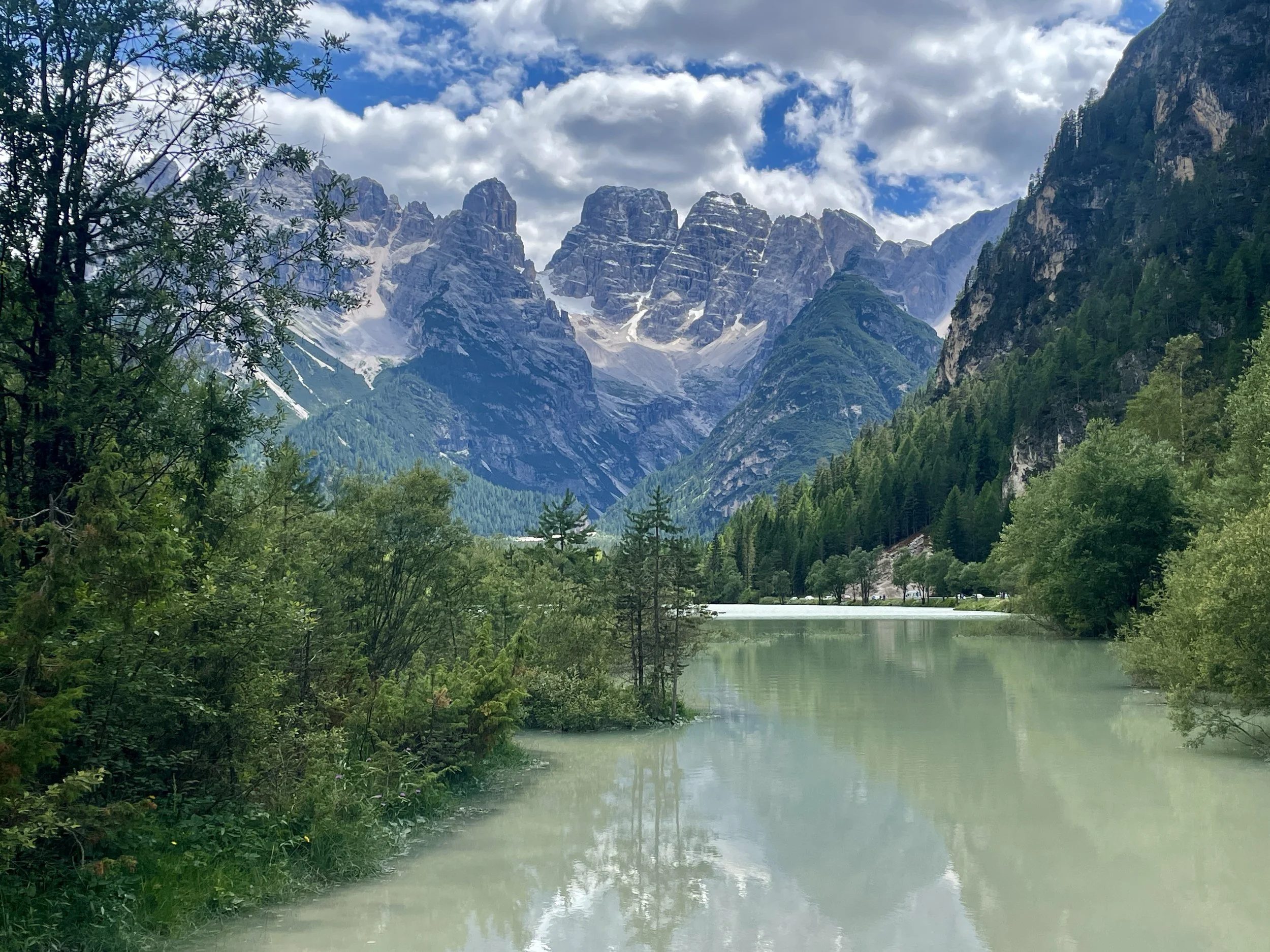
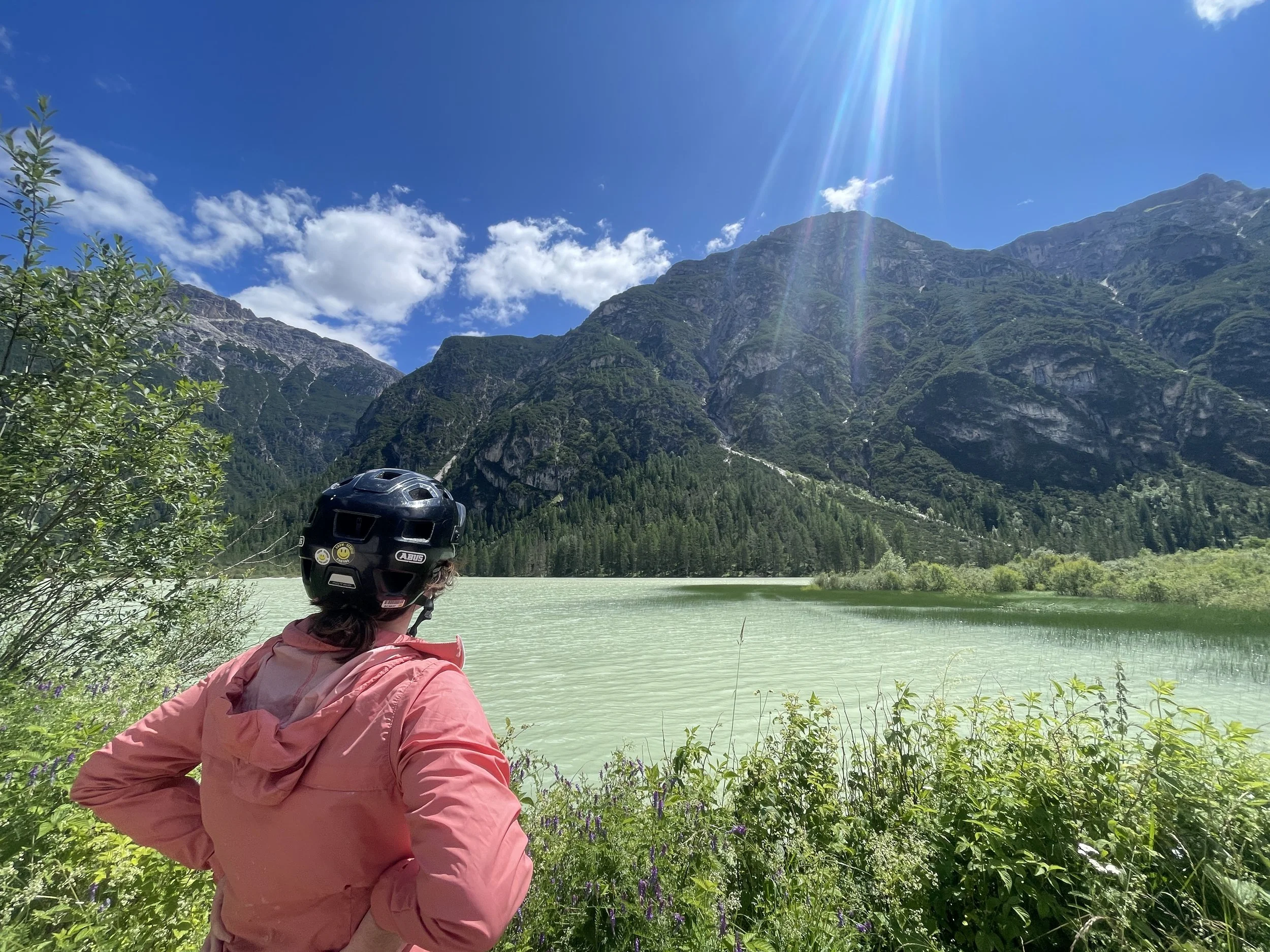
We stumbled upon this view of Monte Cristallo from the bike path as it passes by Lago di Landro. I don’t know what we did to be rewarded with this view, but boy the light was hitting just right when we rolled by.
The Dolomites are an absolute powerhouse for adventure sports and the infrastructure that’s been there for decades makes it very easy to partake. Even for novices. Even if you’ve never climbed before. Even if you don’t know how to clip your boots into your skis. I’m all about making adventure accessible and introducing people to new experiences, and the Dolomites is a great place to do that. And if you’re not a novice, well then you’re in for a treat because this mountain range is intense and there’s plenty for you, too.
Above all, the Dolomites are great for a multisport vacation where you can partake in activities you know or don’t know thanks to the long history of its tourism industry and the independent guides and providers in the area.
That said, all of this means the well-known peaks, towns, and lakes can be pretty full of tourists. So, in order to get the best experience possible in these beautiful jagged and tower-like mountains without feeling like you’re part of a tourist cattle brigade, here’s what to do.
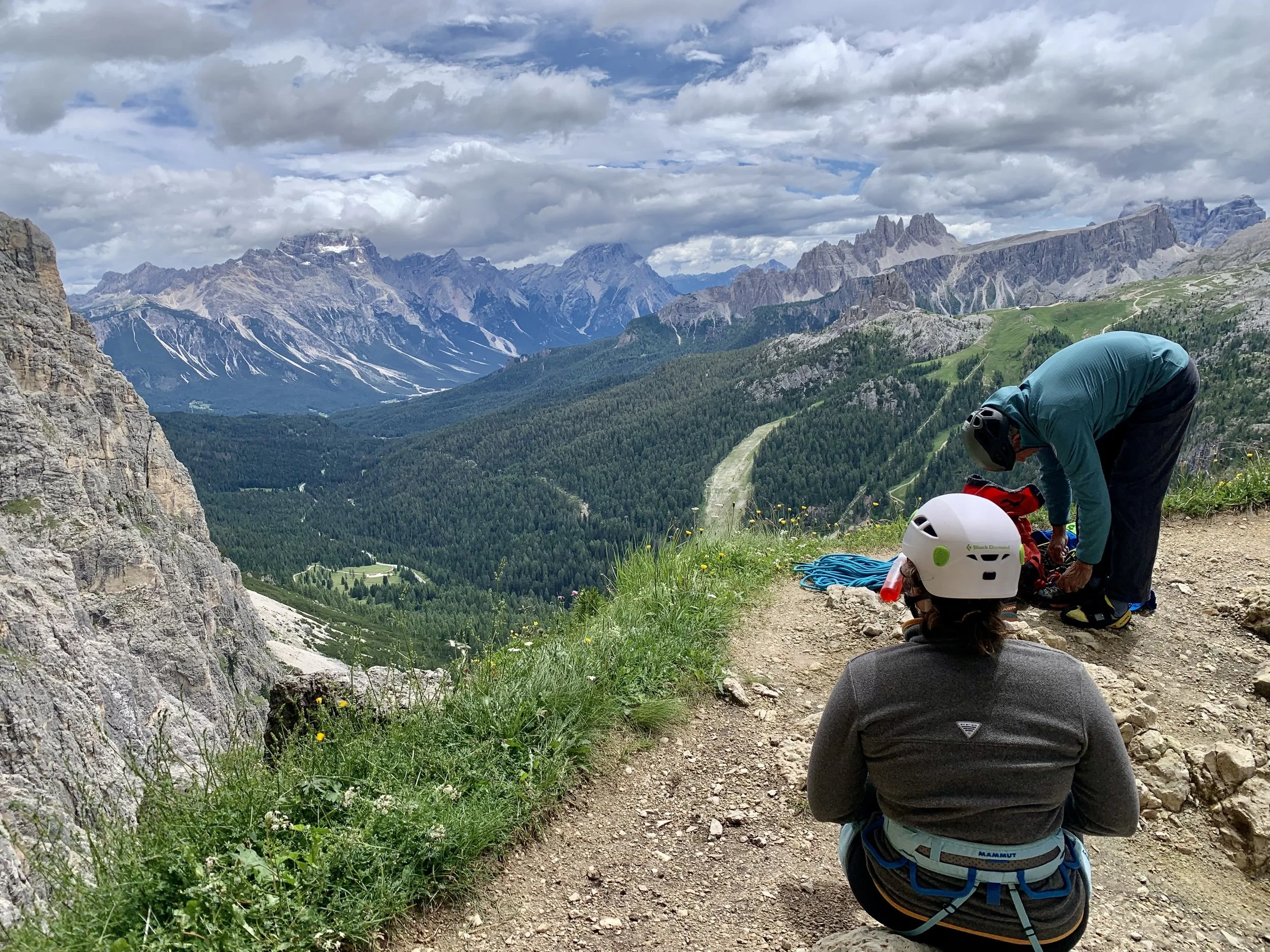
For the best views, head to the tops of peaks whether through hiking, climbing, or via ferrata.
Don’t stay in Cortina or Val Gardenia
Maybe once upon a time this was true, but Cortina in particular is quickly being flipped into a luxury and tourist-centric town that has lost a lot of its year-round inhabitants and thus a lot of its character.
There are a couple of decent restaurants still around that won’t price gouge you, particularly fantastic is Restaurant Ariston, and there are of course some decent hotels that are charming and still independently-owned, but much of the vibe in Cortina has shifted towards wealthy second home owners and tourism. Val Gardenia is pretty much the same—it’s a resort, after all.
So where to stay instead?
I think the Dolomites make the perfect case for staying in hotels, hostels, campgrounds or bed and breakfasts a bit outside of towns that offer half-board (breakfast and dinner). Frankly, you’re probably going to be out and about so much during the day that you’ll just want to chill in the evening, and lodging that serves dinner and drinks is the best sight for weary eyes after you’ve just launched yourself off a mountain a few times (paragliding) or logged a ton of distance on your mountain bike on the area’s renowned paths. The views will be better, the experience more serene and relaxing, and you won’t be stuck trying to decide which restaurant is most likely to actually be good.
Also remember this: regardless of where you stay (in town or in the countryside) you will 100% be driving to wherever you want to go. So don’t let the notion of “well, in X we can walk to dinner” sway your decision too much. Because you can also just walk downstairs to dinner in your mountain lodging where the menu will almost always change daily. We stayed in Cortina this last time and wish we’d stayed outside of town. Our hotel still had half board, which was great, but dealing with the tour busses, parking, and day-trippers for no real added benefit was a big miss on our part.
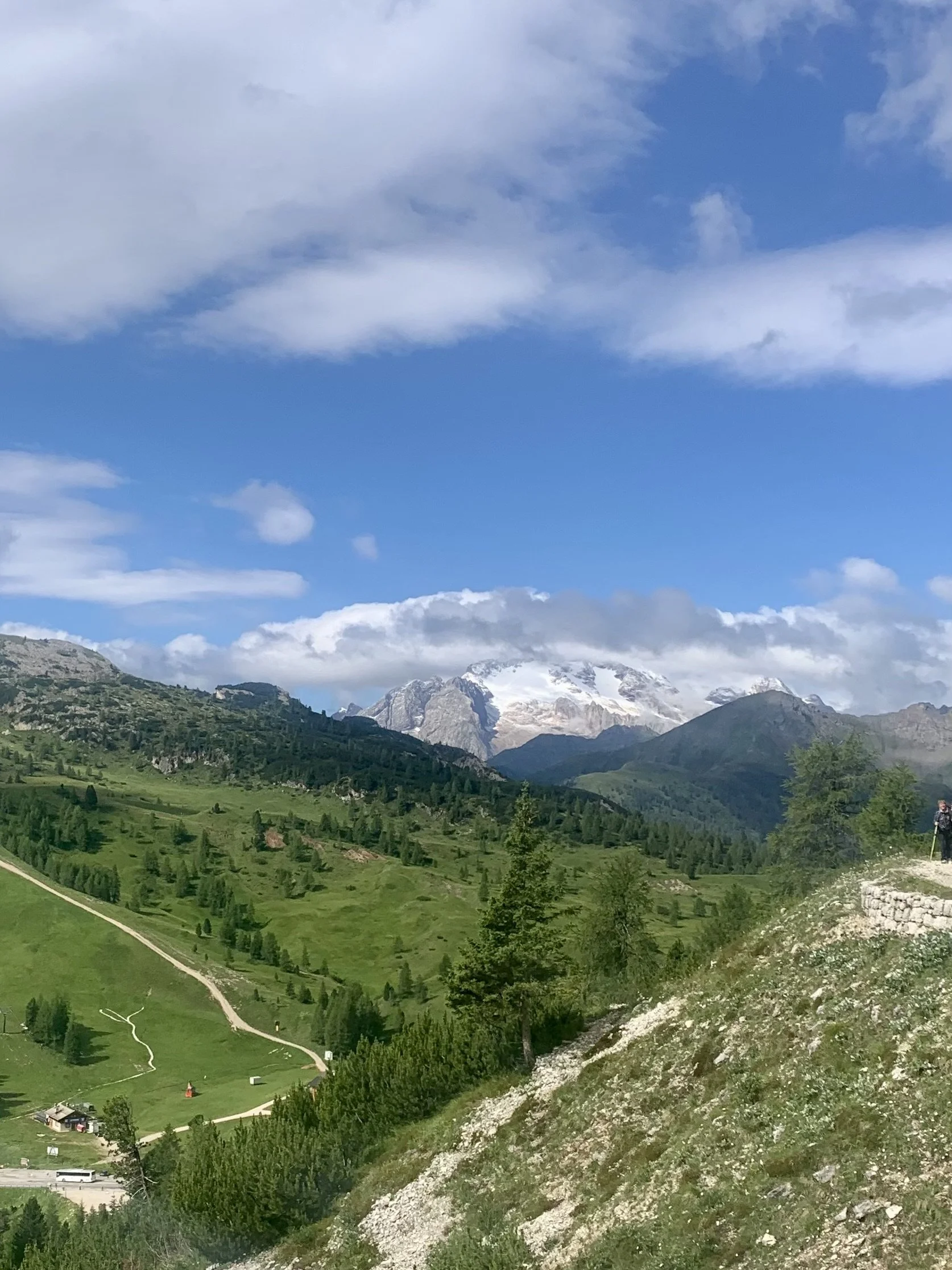
You can climb Torre Falzarego like we did, but you can also hike around the area for amazing views of Marmolada. We were two of only a few people in the area, a nice treat to have the views, sounds, and experience all to ourselves.
Other options can include some of the smaller resorts like San Martino di Castrozza, and we really liked the feel of Dobbiaco/Toblach and Neiderdorf while we were up there for lunch and activities, since they were smaller but still had a couple of restaurants to choose from in addition to lodging options with half board.
Definitely make your Dolomites trip a multisport adventure.
The Dolomites are primed for a multisport vacation. I can’t stress that enough. Sure, if you want to focus on a bike trip peddling from peak to waterfall to lake to town, or you’d prefer one of the classic hut-to-hut hikes that keep you high in the mountains with stunning views for days, go for it (even though you can and I’d argue, should, throw in at least one climb or a paraglide flight while you’re there.)
Things to consider adding to your itinerary include a tandem paraglide flight around the northern bits of the range, from Otisei and Val Gardena over to Dobbiaco. We took a couple of flights with Tandemfly and had a blast, not to mention the beautiful scenery! Once you’re done, hop over to the pub for a radler to celebrate surviving (this is what our guides said, not me).
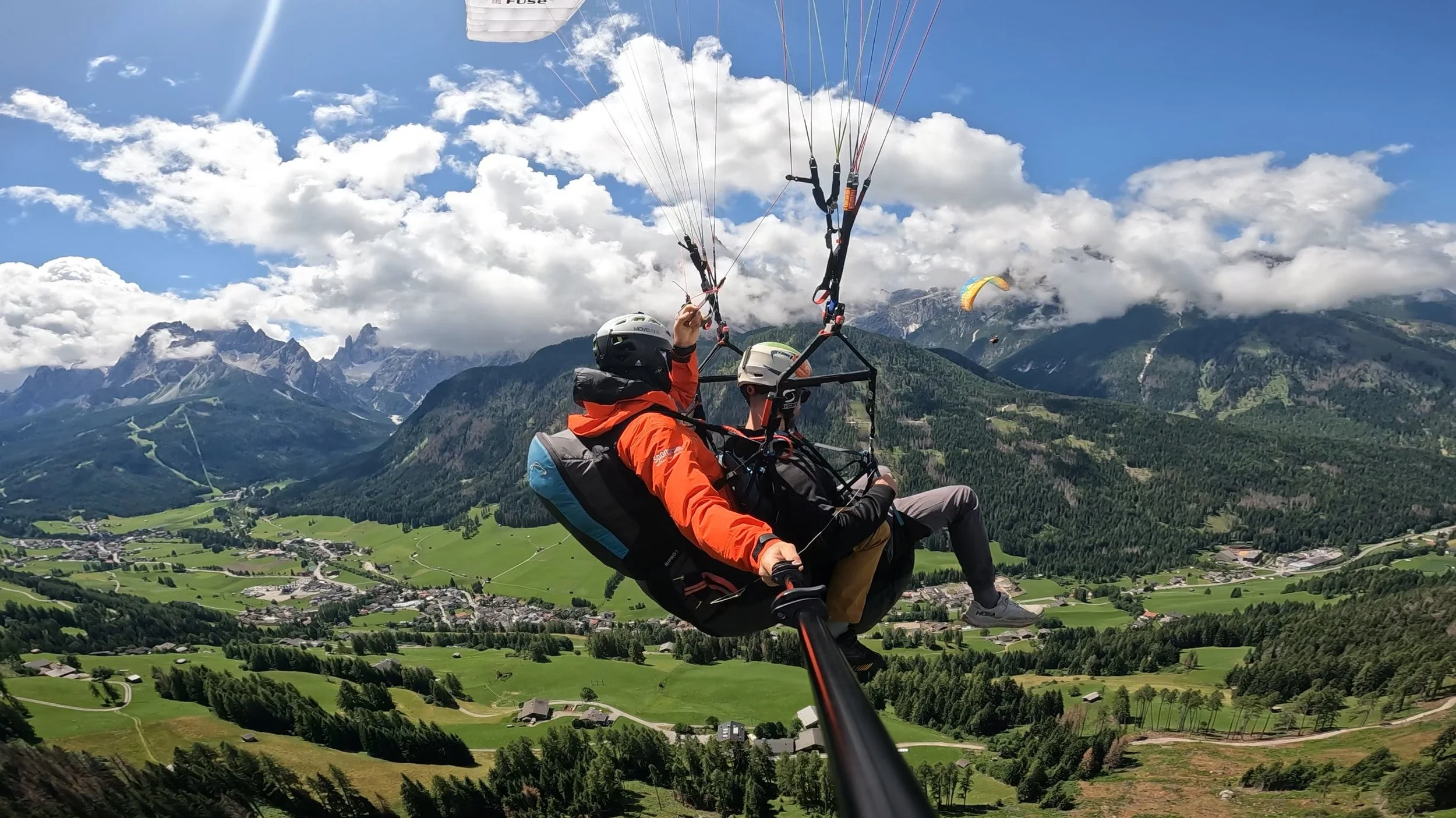
Flying high over the valley in Sexten!
There’s amazing canyoning and some whitewater paddling around the southern bit, and loads and loads of climbing all over the mountain range. So much climbing that it’s really best to get in touch with a guide close-ish to where to you’re staying and get their opinion on what to climb that matches your ability and timing of your trip.
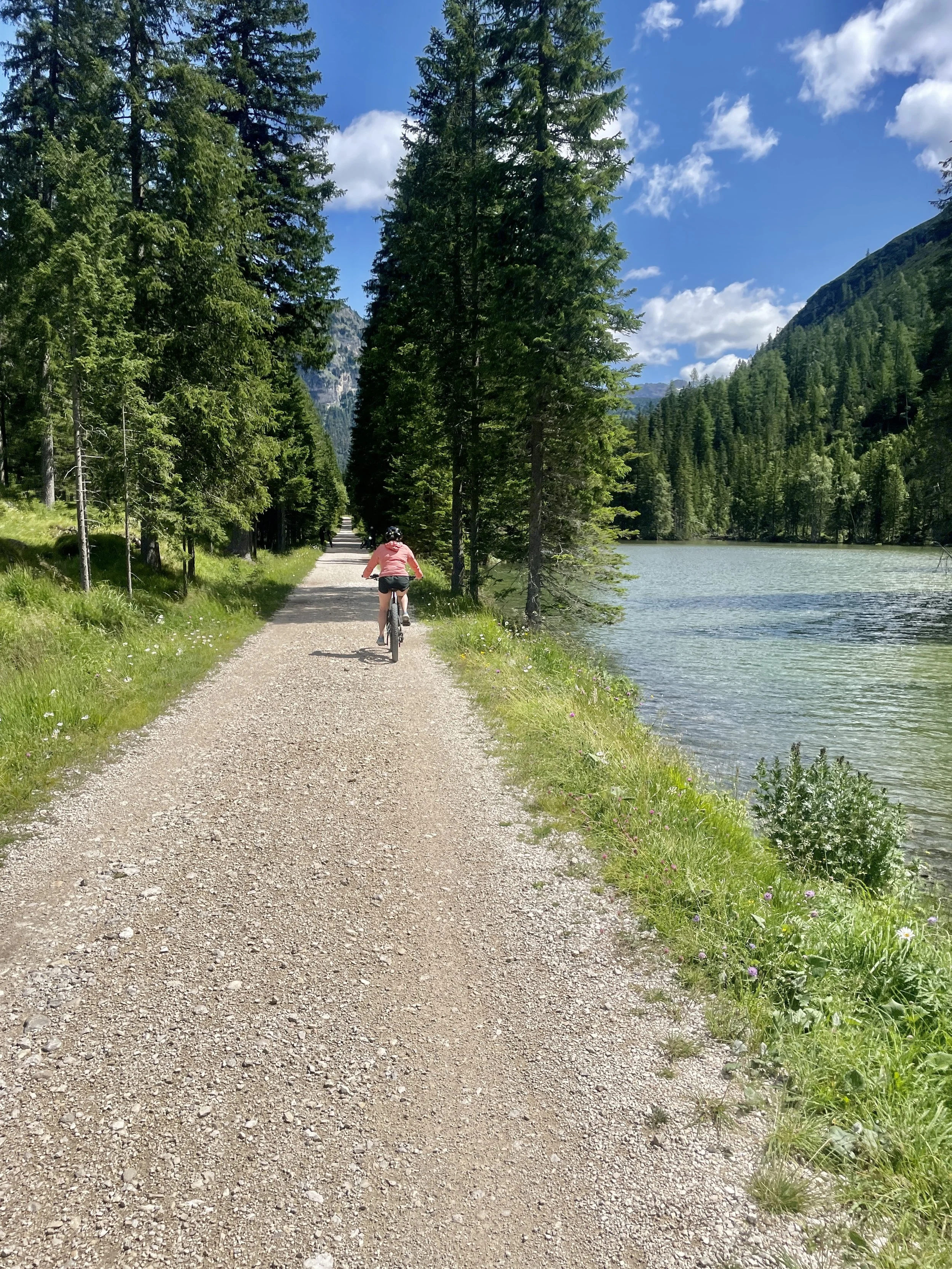
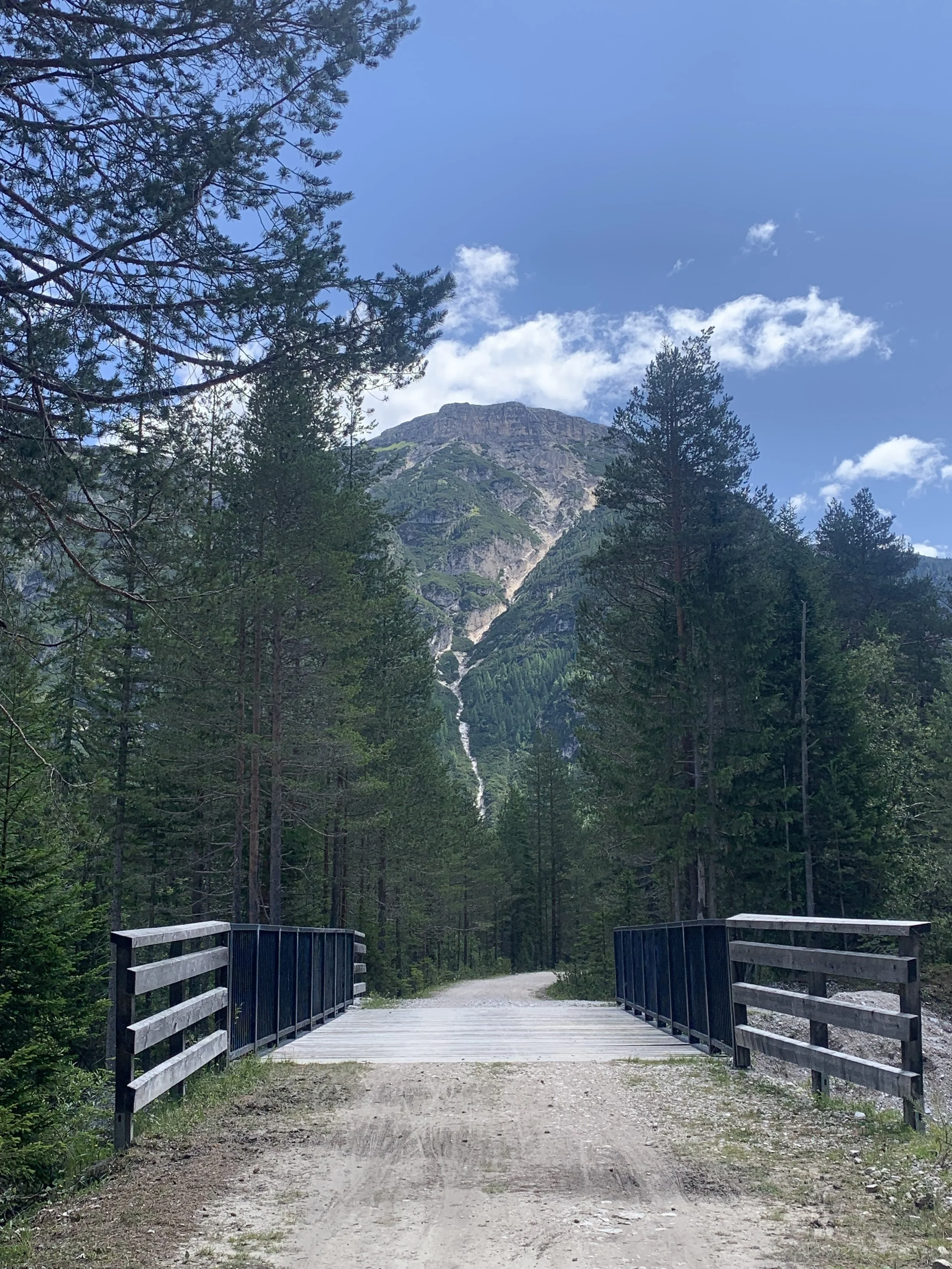
There’s also a ton of biking, on both road and trail. There’s a nice, relatively flat gravel trail that’s good for beginners on mountains bikes that connects Dobbiaco and Cortina, passing by Tre Cime and Lago di Landro, and Monte Cristallo. This one is good for a leisurely out and back day trip. Alternately, there are loads of other trails through the northern valleys, and Sudtirol Rad makes it easy to find a route with their map, rent a bike, and get going.
Of course, with these activities, I’m talking about a summer trip. But the area did just host the winter olympics, so there’s plenty of skiing and snowshoeing in the winter, too.
Talk to your hotel, a guide, or an outfitter for their recommendations on specific routes and paths.
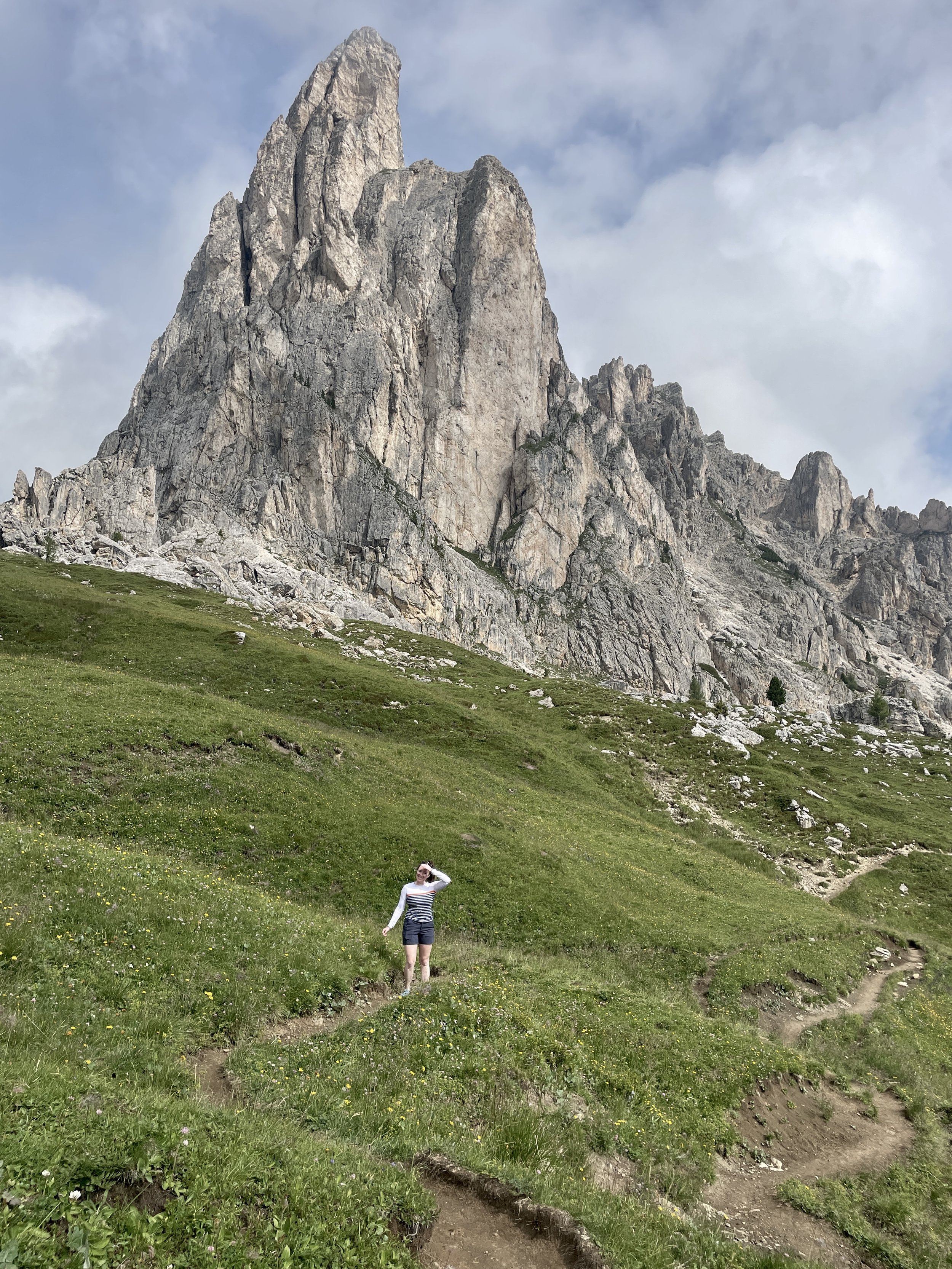
Going around Monte Nuvolau in the Dolomites, accessible from Passo Giau. This hike also takes you right by Cinque Torri, avoiding the pricey cable car and providing many, many more views and a stunning hike.
I just realized I was about to forget to mention hiking. How could I?! I won’t rehash here what’s already well and comprehensively documented on AllTrails, because that effort would be futile. The one thing I will say about hiking in the Dolomites is that I see absolutely no reason to pay for some of the well-known hikes and peaks. For one, if you’re on it, you can’t see it. And these are so pretty, you’ll want to see them. For example, from some points around Passo Giau, you get an amazing view of Cinque Torri, and from the Falzarego area you get stunning views of Marmolada. Also, in an area so full of amazing peaks and towers, there’s no need to hike the paths that everyone else is doing, or where the tour buses are cramming into. This one piece of advice also applies to every other sport you could try while visiting, so talk to your hotel, call up an outfitter or stop by once you arrive in town and ask for their recommendations. They’ll know how to consider the weather at the moment and talk you through your wishes and abilities.
